Whalesync ID column
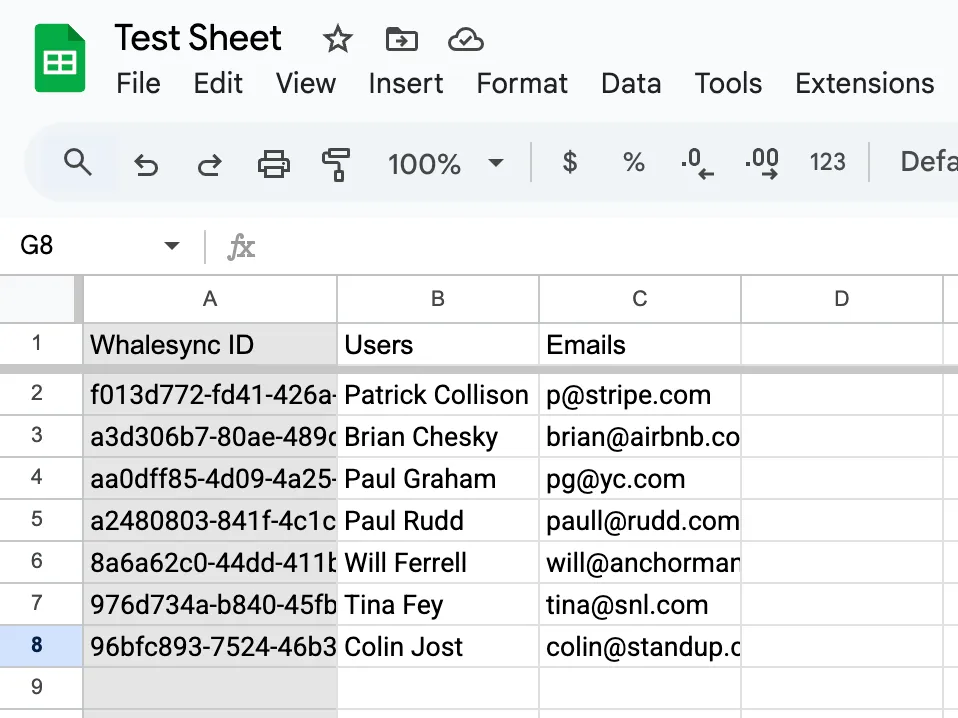
Google Sheets doesn't give rows a unique ID, so Whalesync adds a Whalesync ID column to each synced sheet. Avoid editing it, since it identifies each row.
To enable syncing, Whalesync adds a “Whalesync ID” column to each sheet in your Google Sheets.
Why does Whalesync need to add a Whalesync ID column?
Section titled “Why does Whalesync need to add a Whalesync ID column?”Unlike most apps and databases, Google Sheets doesn’t assign a unique ID to each row. To enable syncing, Whalesync adds its own ID column to uniquely identify each row.
Can I edit this column?
Section titled “Can I edit this column?”In general, you want to avoid editing this column since it is how Whalesync identifies each row. For example, this is why we suggest avoiding sort range.