Formatting columns
Format Google Sheets columns as numbers, percentages, or dates so they match field types in other apps and two-way sync. Text columns need no formatting.
About data types
Section titled “About data types”Google Sheets has two data type categories: 1) Numbers and 2) Text
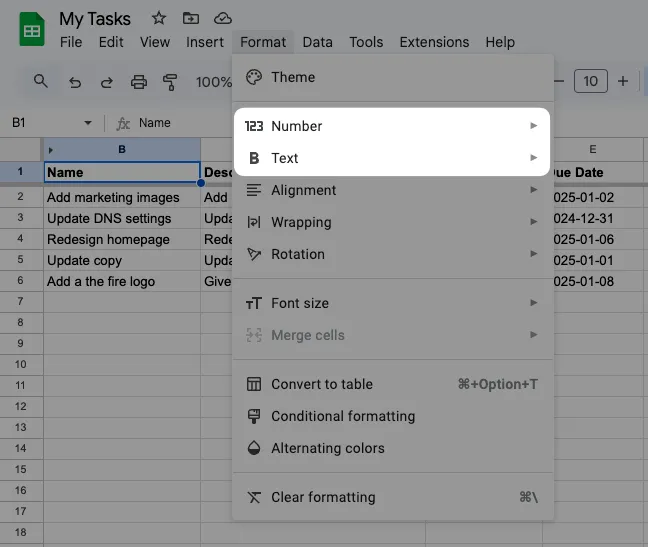
How to Format columns
Section titled “How to Format columns”To format a column in Google Sheets simply:
- Highlight the column
- Select "Format"
- Choose the data type

Why formatting columns is important
Section titled “Why formatting columns is important”In order to two-way sync fields, data types must match across your apps.
For example, if you have a Date field in Airtable and want to two-way sync it with Google Sheets, you'll need a Date field in Google Sheets.
Data types in Google Sheets
Section titled “Data types in Google Sheets”Text fields will two-way sync by default. No additional formatting is needed for:
- Text
- Long-text
- Drop-down
- Multiple Select (name the column
multi_[column name], see Multi-select fields)
Numbers
Section titled “Numbers”Number fields need to be formatted in order to two-way sync:
- Numbers
- Percentages
- Dates
Bonus: foreign keys
Section titled “Bonus: foreign keys”Learn how to use foreign keys in Google Sheets here:
Foreign keys