# Auto-create tables


<figure><img src="https://2481481593-files.gitbook.io/~/files/v0/b/gitbook-x-prod.appspot.com/o/spaces%2FtLaMDbvbGOow76E8CnqW%2Fuploads%2FHshYSvSWf0LPNb5inTn6%2F2024-12-30%2012.36.53.gif?alt=media&#x26;token=6e9b720d-c5b2-4085-89b6-0bd7716dc8c2" alt=""><figcaption><p>Auto-creating a Blog Posts table in Airtable from a Blog Posts collection in Webflow</p></figcaption></figure>

### What is auto-create tables?

Whalesync can now automatically create tables in your spreadsheet!

This way you don't have to add all the fields you want to sync manually :relaxed:

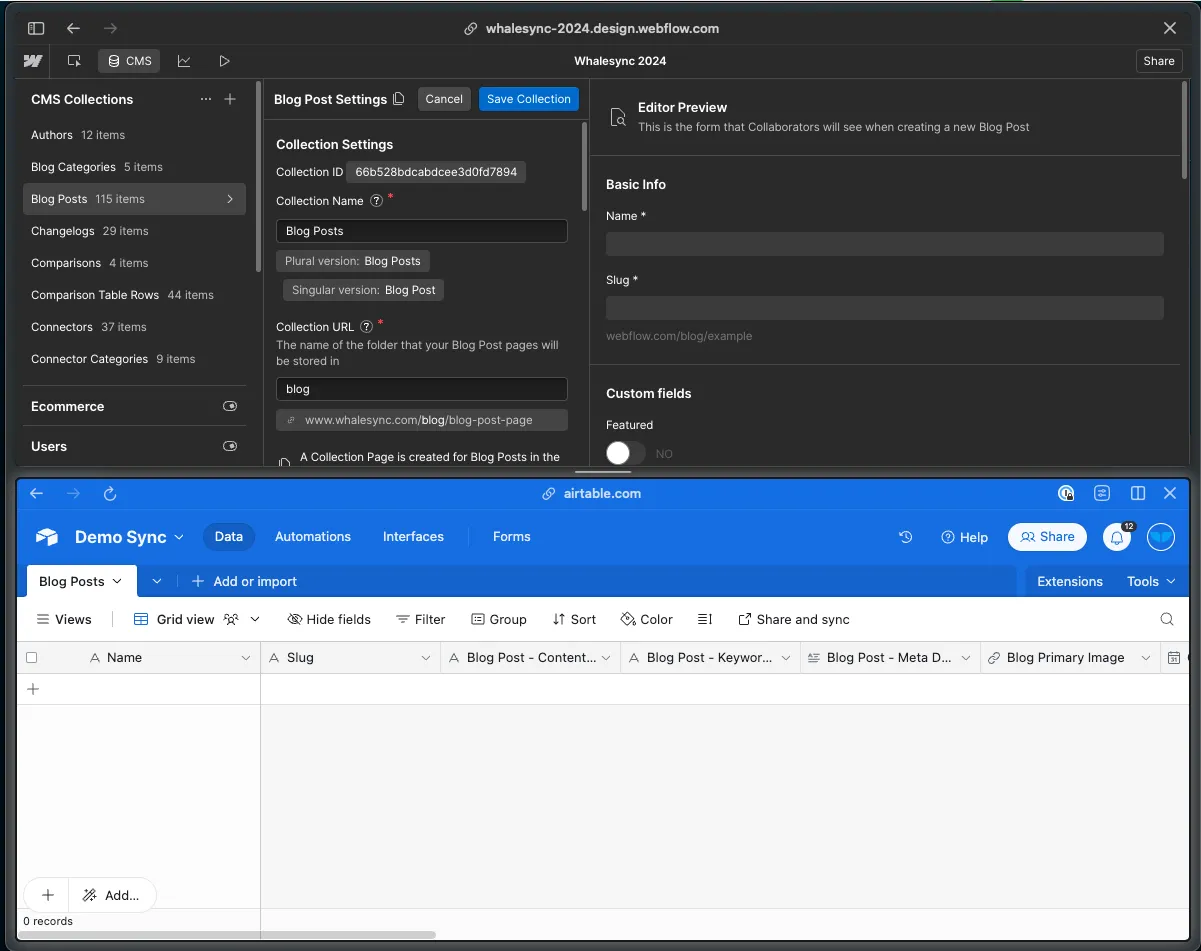
*E.g. Connect a Webflow Blog Posts collection and create a table in Airtable with all the same fields!*

<figure><img src="https://2481481593-files.gitbook.io/~/files/v0/b/gitbook-x-prod.appspot.com/o/spaces%2FtLaMDbvbGOow76E8CnqW%2Fuploads%2FnjjgCBiygYSVDnrzBz8K%2FWebflow%20%2B%20Airtable.png?alt=media&#x26;token=6dc10ee3-a656-48b3-91d6-80b6ce64f1ba" alt=""><figcaption><p>This Airtable table below was auto-created from the Webflow collection on top</p></figcaption></figure>

### How do I auto-create tables?

To auto-create tables simply:

1. Select the table in your other app.
2. Select "Create new table" in the Airtable/Sheets dropdown.
3. Choose the fields you want auto-created.

<figure><img src="https://2481481593-files.gitbook.io/~/files/v0/b/gitbook-x-prod.appspot.com/o/spaces%2FtLaMDbvbGOow76E8CnqW%2Fuploads%2FVNpRNM8Y6TpEfrhPs0J7%2F2024-12-30%2012.35.50.gif?alt=media&#x26;token=6e23e2d4-88e7-4948-90ba-72b355b504e9" alt=""><figcaption><p>Kicking off auto-create for a Blog Posts table</p></figcaption></figure>


---

# Agent Instructions: Querying This Documentation

If you need additional information that is not directly available in this page, you can query the documentation dynamically by asking a question.

Perform an HTTP GET request on the current page URL with the `ask` query parameter:

```
GET https://docs.whalesync.com/features/auto-create-tables.md?ask=<question>
```

The question should be specific, self-contained, and written in natural language.
The response will contain a direct answer to the question and relevant excerpts and sources from the documentation.

Use this mechanism when the answer is not explicitly present in the current page, you need clarification or additional context, or you want to retrieve related documentation sections.