Full records vs. shallow records
Why Whalesync syncs Affinity records as shallow records with only a name and email by default, and how to fully sync a list to get every field.
Unless you are on Affinity's Enterprise plan, Affinity has significant API limitations which limits our ability to sync all records. To work around this, Whalesync groups your records into two categories:
- Records you care about (full records)
- Records you don't care about (shallow records)
Affinity API limits
Section titled “Affinity API limits”Affinity has the following monthly API limits on its plans:
- Essentials = none (no API access)
- Scale = 100,000 calls/mo
- Advanced = 100,000 calls/mo
- Enterprise = unlimited
Difference between full records and shallow records
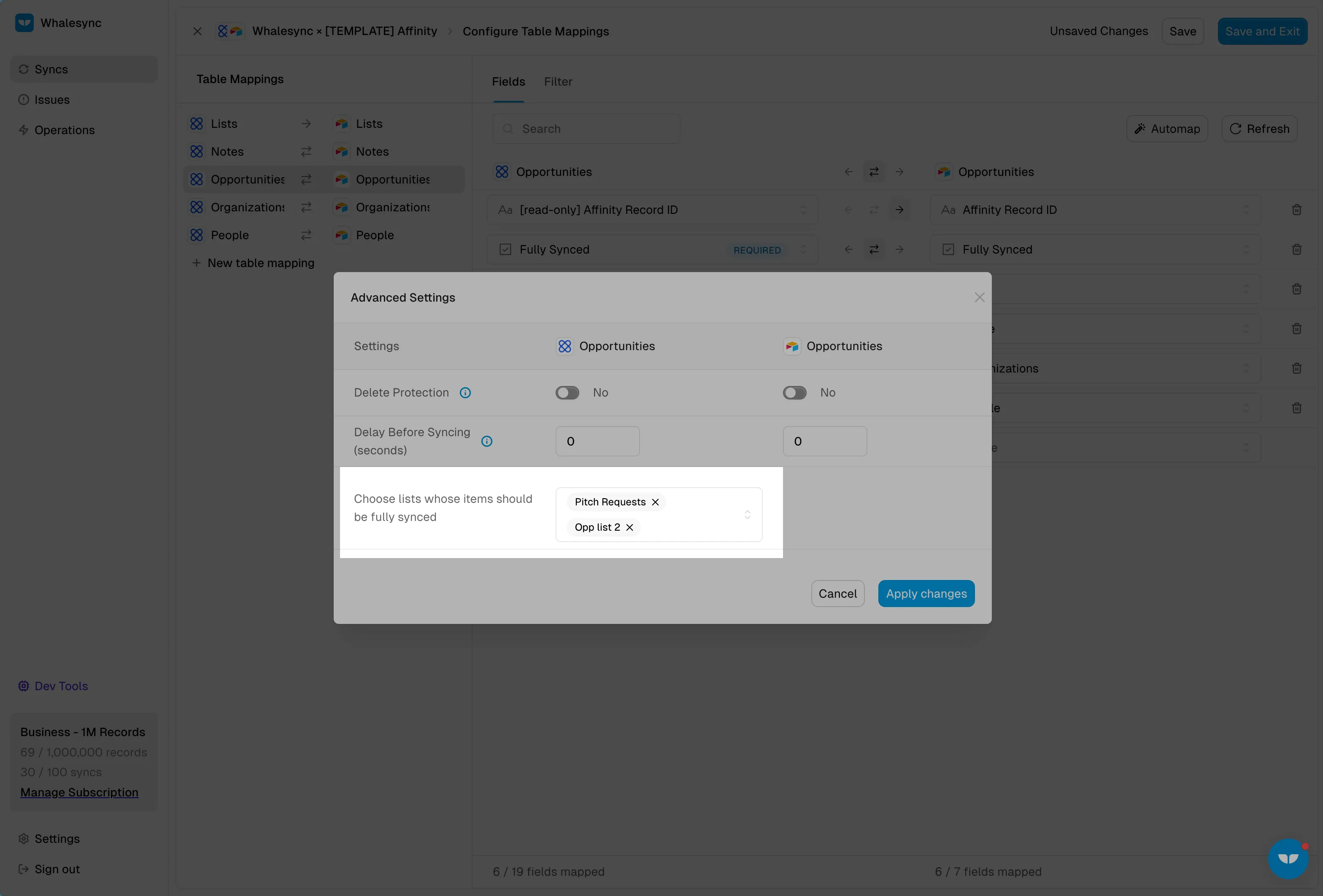
Full records include every field you want to sync:

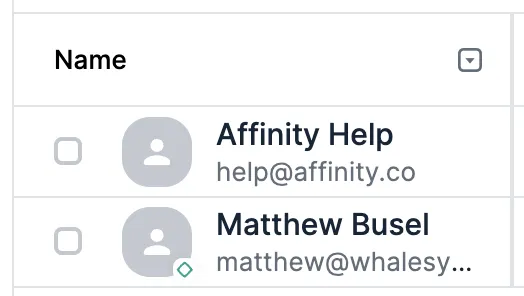
Shallow records only include the display name and email address (if applicable):
How to sync full records
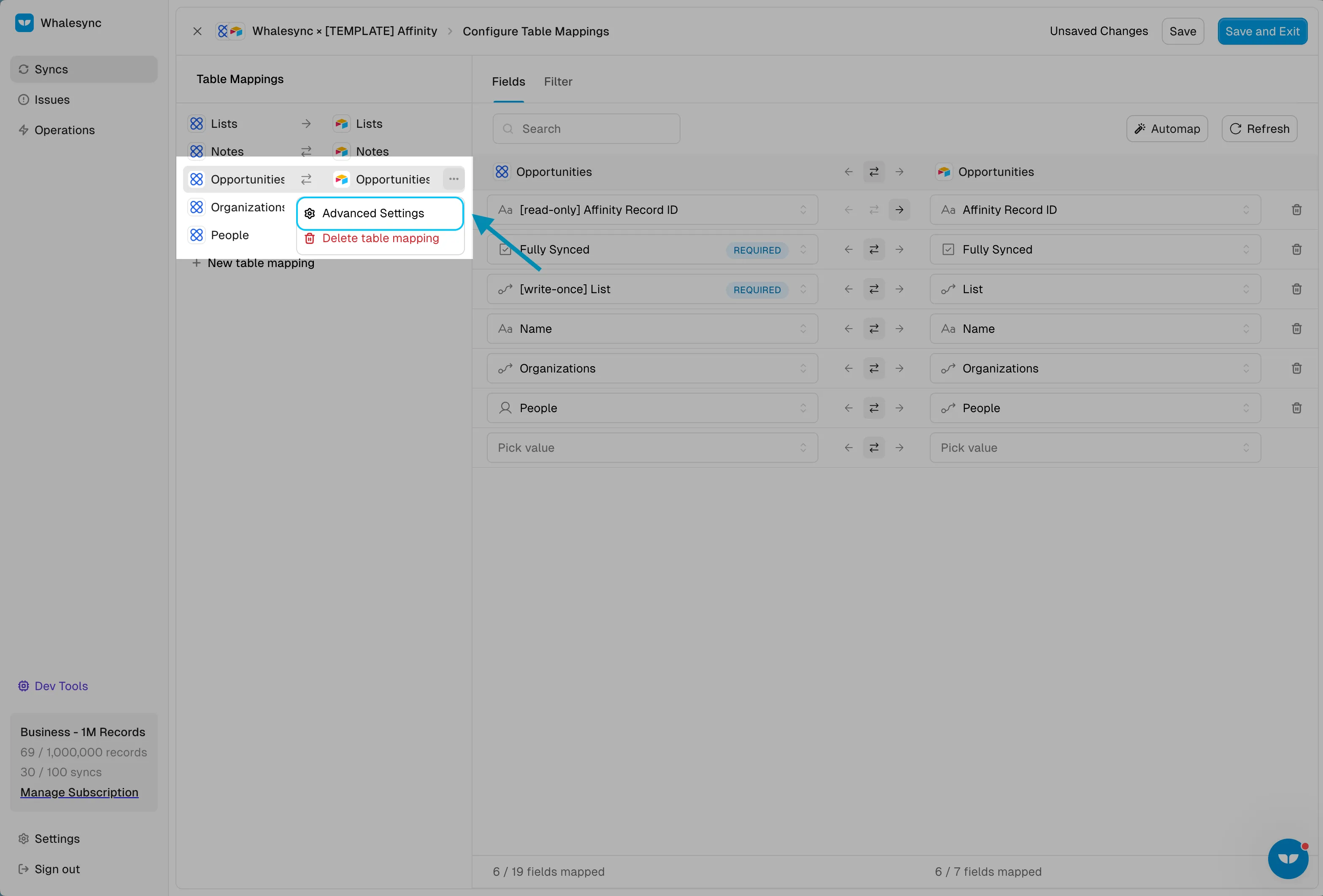
Section titled “How to sync full records”By default, Whalesync will sync records as shallow records. If you want to fully sync a group of records you must:
- Add them to at least one list
- Select to fully sync that list on the table mapping screen