Notion page sync
Map the Page Content field to sync Notion pages to rich text fields in Webflow and other apps. Covers supported blocks and limits when syncing into Notion.
About Notion Page Sync
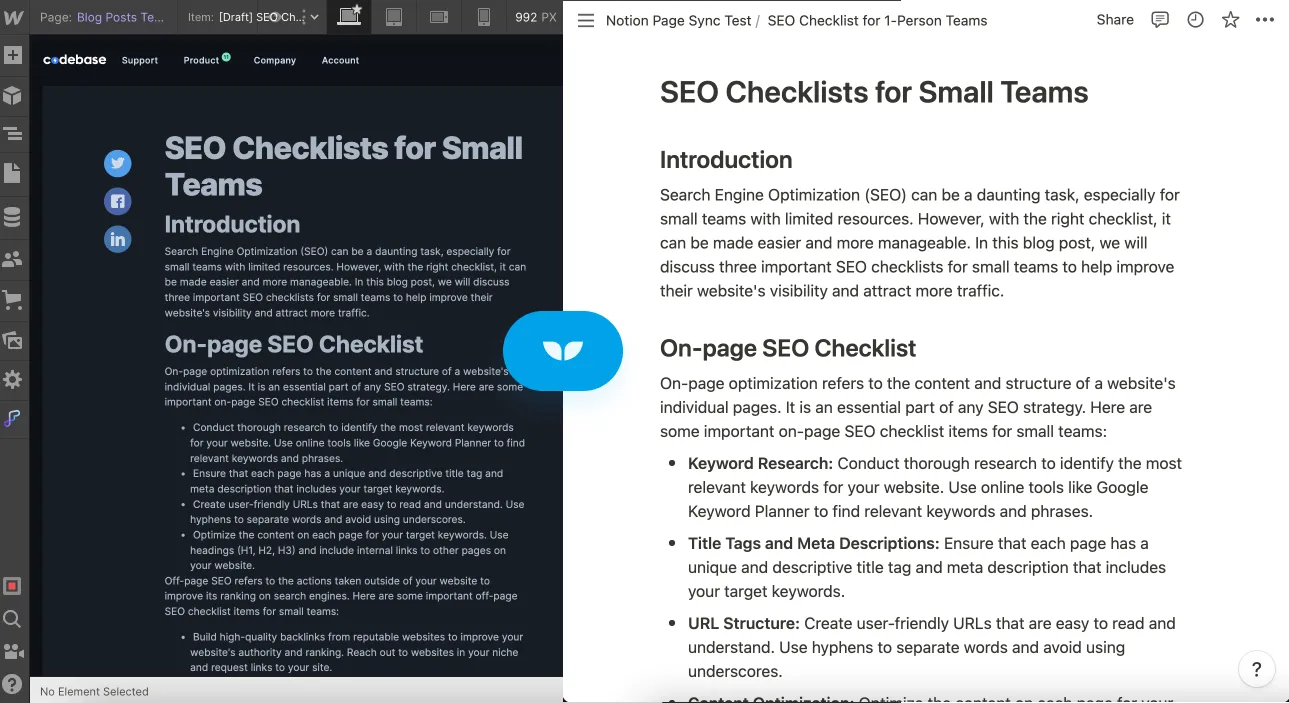
Section titled “About Notion Page Sync”Notion Page Sync syncs the content of Notion pages to rich text fields in other apps.
This enables you to write entire blog posts in Notion and sync them to your live blog or site. You can even use Notion AI to write these posts for you.
When to use Notion Page Sync
Section titled “When to use Notion Page Sync”Notion Page Sync works best when Notion is the original source of your content. This is because Whalesync can reliably convert Notion's block-based format into HTML for other apps, and when that content is edited elsewhere, we can preserve and map it back to Notion's structure. However, the reverse isn't true—arbitrary HTML from other sources can't always be converted into Notion's proprietary block format. As a result, you might find that some of your styling or custom HTML is lost when sending updates back to your website.
If you only need content to flow into Notion from another app, try using a one-way sync on just the Page Content column or the whole table.
Notion page content vs. Notion records
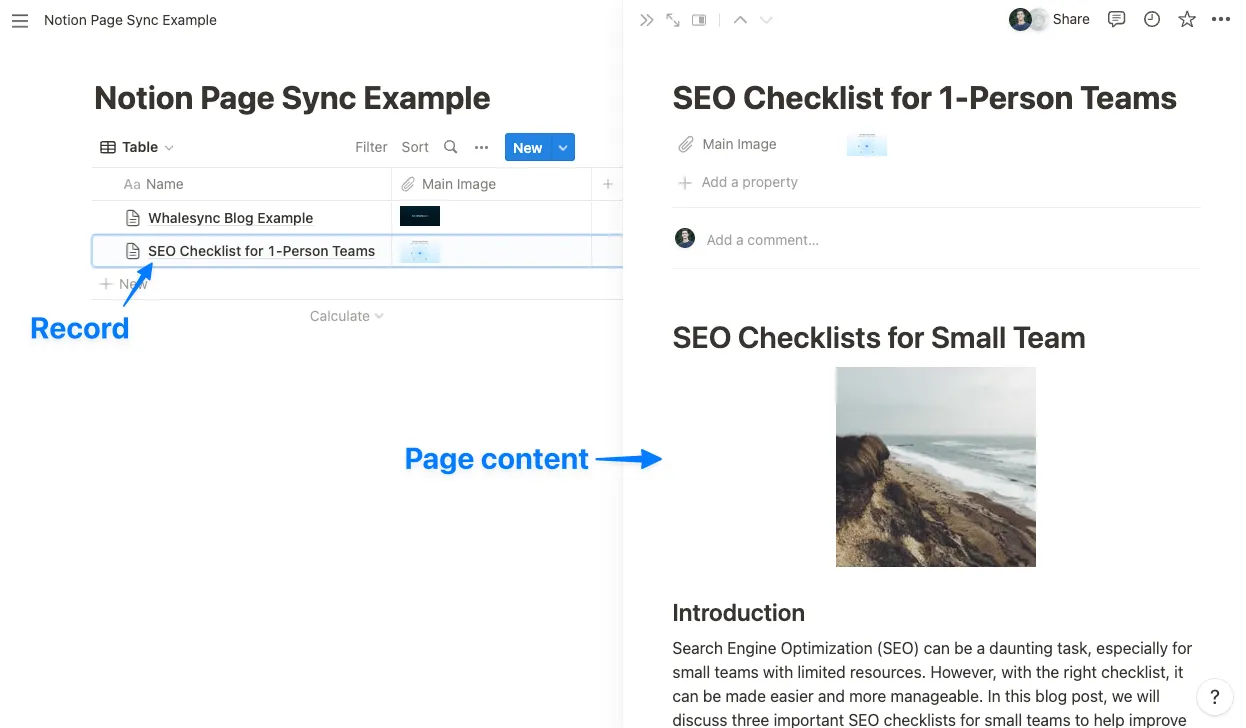
Section titled “Notion page content vs. Notion records”A Notion database has a list of records. If you open one of those records, it opens up a page. That page is what Whalesync considers "Notion page content":
How to set up Notion page sync
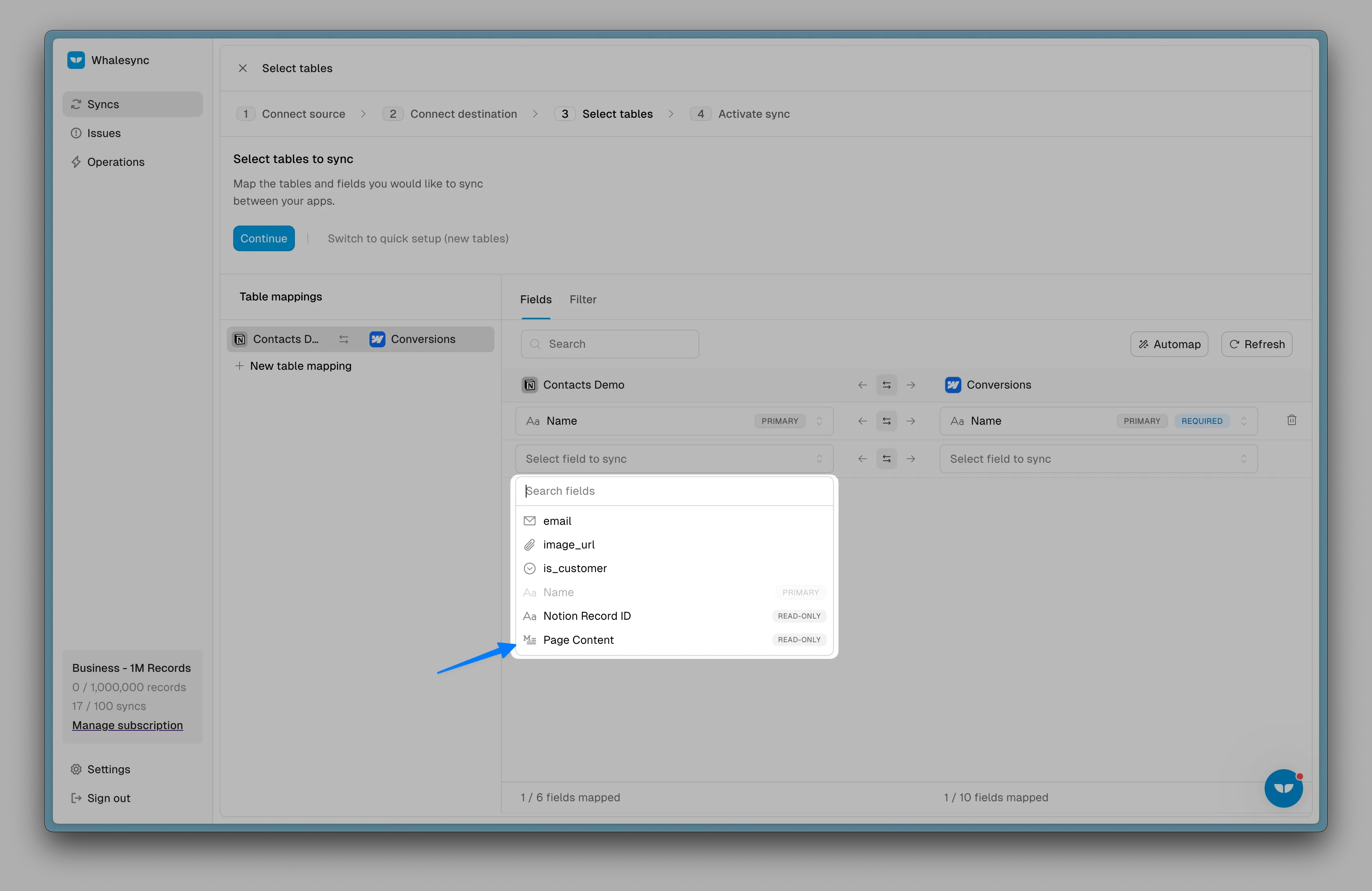
Section titled “How to set up Notion page sync”To use Notion page sync, simply map the "Page Content" field on the field mapping page. This typically maps to a rich text field in other apps like Webflow.
Things to keep in mind
Section titled “Things to keep in mind”.BzintwJb_Z1Y7m9D.webp)
Supported blocks
Section titled “Supported blocks”If there are blocks or media formats that you need but do not see listed below, please reach out to support@whalesync.com. We are always looking for ways to improve the product!
| Block | Status |
|---|---|
| 📝 Paragraph | ✅ Supported |
| 💪 Headings (h1-h3) | ✅ Supported |
| 🖼️ Images (png, jpg, gif, svg) | ✅ Supported |
| 🖼️ Images (unsplash) | ➡️ Supported (1-Way) |
| 🔗 Links | ✅ Supported |
| 📹 Video (youtube) | ➡️ Supported (1-Way) |
| 📹 Video (vimeo, wistia) | ✅ Supported |
| 📹 Video (mp4, ogg, webm) | ➡️ Supported (1-Way) |
| ⚫ Bulleted list | ✅ Supported |
| ⚪ Sub-bulleted list | ✅ Supported |
| 1️⃣ Numbered list | ✅ Supported |
| 🇦Sub-numbered list | ✅ Supported |
| 🎤 Quote | ✅ Supported |
| ⌨️ Code inline | ✅ Supported |
| ⌨️ Code block | ✅ Supported |
| 🔈Audio (mp3, ogg) | ➡️ Supported (1-Way) |
| ☑️ To-do list | ✅ Supported |
| ➖ Divider | ✅ Supported |
| ⬇️ Toggle | ➡️ Supported (1-Way) |
| 🔖 Bookmark | ✅ Supported |
| 📊 Table | ✅ Supported |
| 🗣️ Call outs | ✅ Supported |
| 📐 Column list/Column | ➡️ Supported (1-Way) |
| 🔄 Synced blocks | ✖️ Not Supported |
| 📋 Template | ✖️ Not Supported |
| 🍞 Breadcrumb | ✖️ Not Supported |
| 📑 Table of contents | ✖️ Not Supported |
| 📄 Child page | ✖️ Not Supported |
| 🗃️ Child database | ✖️ Not Supported |
| 🔗 Link to page | ✖️ Not Supported |
| 🔗 Link preview | ✖️ Not Supported |
| 🔢 Equation | ✖️ Not Supported |
| ✖️ Not Supported | |
| 📁 File | ✖️ Not Supported |
| 👇 Mention | ✖️ Not Supported |